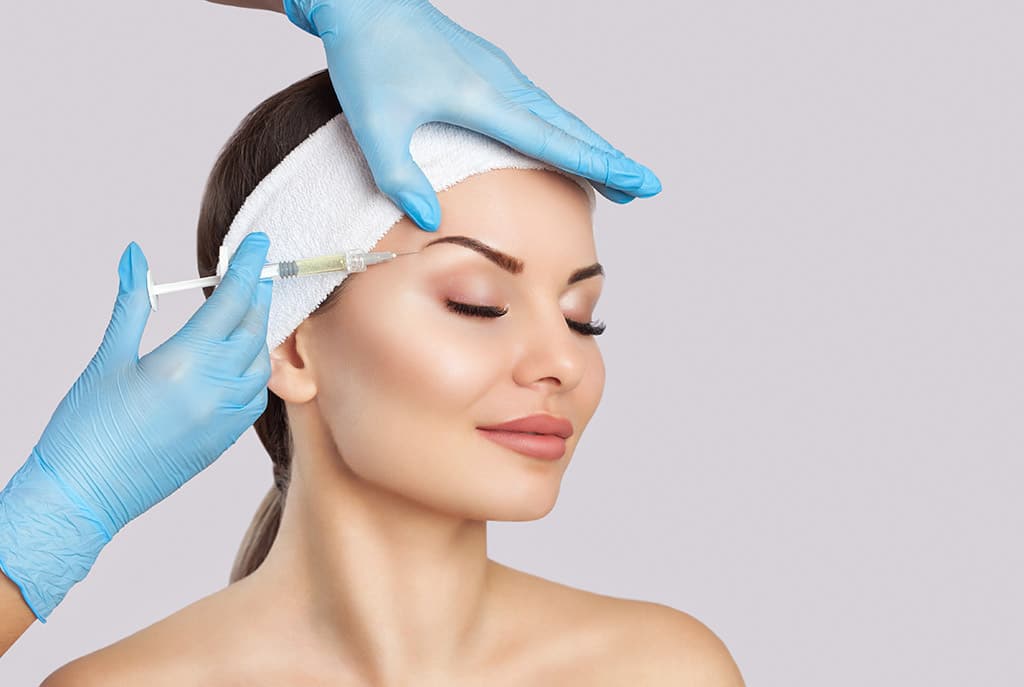
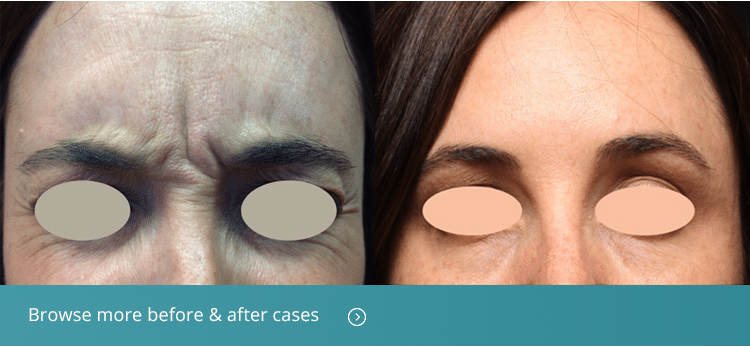
Dysport is similar to Botox, but it is manufactured by a different company. Like we have many brands of soda, Botox now has competing products as well. Dysport is FDA-approved and is used to relax muscles and reduce wrinkles. As we animate our faces, our muscles contract to form forehead creases; smile, scowl, and squint lines. Dysport works by disrupting signals between nerves and muscles, so that the muscles aren’t able to “flex.” This causes less muscle movement and prevents creases and wrinkles from becoming etched into the skin. Although Dysport is best for wrinkles that are formed when animating the face, it can be used to soften some deeper lines that are present at rest. Multiple Dysport treatments can improve these wrinkles over time, but lines may not completely disappear. This is like trying to iron-out pressed pant pleats. You can reduce the creases, but faint fabric folds may still show.
Most often Dysport is used to target horizontal forehead lines, squint lines (crow’s feet), and scowl lines (“angry 11s”). With specialized technique, it can also be used to increase eyebrow arch, smooth “sniff” or “bunny” lines, raise a down-turned smile, correct a pebbly chin, elongate the face, minimize a masculine jaw, soften vertical neck bands, and control excessive sweating on the palms, soles, & under the arms.
Dysport takes 2-7 days to reduce muscle movement, and it typically lasts between 3-4 months. Muscle movement gradually returns as its effects wane. Repeat treatments every 3-4 months help soften lines most effectively.
At Moy-Fincher-Chipps, our goal is to maximize your comfort during treatment sessions. Because we use very fine needles, most patients experience minimal discomfort. Topical numbing cream and ice packs are available if desired. Temporary bruising and swelling are possible, but other side effects are rare. Before treatment, your provider will thoroughly discuss the procedure and answer any questions you may have.
Castor oil has experienced a major comeback in recent years, popping up across social media feeds, beauty blogs, and DIY skincare routines as a low-cost, “all natural” solution for everything from acne to anti-aging. With so much buzz around this old-school ingredient, many patients are wondering whether the hype actually holds up under scrutiny. Keep…
Skin conditions are rarely as straightforward as they look. What appears to be a simple rash, breakout, or growth can have several possible causes, and an initial diagnosis or treatment plan does not always tell the full story. Seeking a second opinion is a normal part of taking your health seriously, and it can bring…
Walking down the skincare aisle can feel overwhelming, with hundreds of products promising brighter, smoother, younger-looking skin. Many patients spend years cycling through drugstore options before realizing that the results they are hoping for require something stronger. Professional skincare products, often referred to as medical-grade, are formulated differently and dispensed through a dermatology practice rather…
Your skin is your body’s first line of defense, but even healthy skin can develop an infection from time to time. With these infections, it’s important to seek care quickly, which often means simpler treatment and a faster recovery. Keep reading to learn about six of the most common skin infections, how to recognize them,…
More people than ever are looking for subtle, long-lasting ways to address facial volume loss and skin laxity without committing to surgery. Sculptra has become one of the most talked-about injectables for exactly this reason, offering gradual, natural-looking results that can last for years. However, Sculptra is not the right fit for every patient or…
Needle anxiety is one of the most common reasons people delay or avoid cosmetic treatments they would otherwise enjoy. Yet wrinkle relaxers remain one of the most requested cosmetic treatments in the country, year after year. Keep reading to learn what actually happens during a wrinkle relaxer appointment and why so many nervous first-timers walk…