

Spider veins and small varicose veins are incredibly common, but that doesn’t make them any less frustrating to deal with. Many patients spend years covering up their legs before finally looking into sclerotherapy, only to find themselves with a long list of questions they’re not sure how to answer.
Keep reading to learn six of the most frequently asked questions about sclerotherapy so you can walk into your consultation feeling informed and confident.
1. Who Is a Good Candidate for Sclerotherapy?
Most adults bothered by spider veins or small varicose veins are reasonable candidates for sclerotherapy. That said, certain factors, including pregnancy, blood-clotting conditions, and some medications, may mean the timing isn’t right or that a different approach would serve you better.
A thorough consultation is the most reliable way to find out whether sclerotherapy is the right fit for your situation.
2. What Happens During the Procedure?
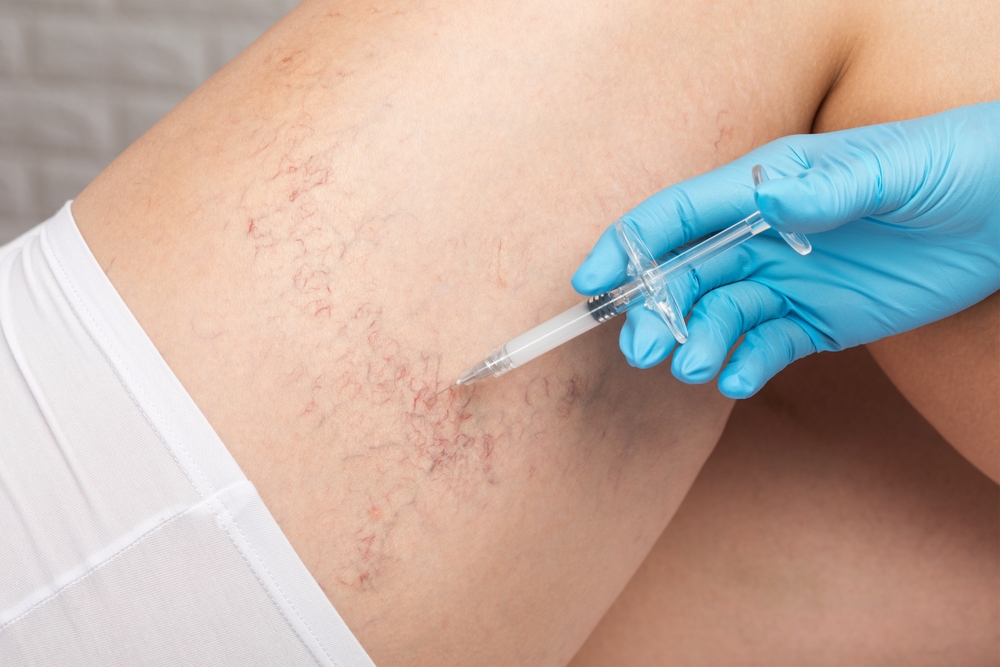
During sclerotherapy, a provider uses a very fine needle to inject a solution into the targeted veins. Our offices use ASCLERA®, the only name brand FDA-approved medication for treating spider veins. The solution dries the inner wall of the vein, causing it to seal shut.
Most sessions take between 15 and 30 minutes, depending on how many areas are being treated. The medication itself is painless so patients only feel a small pinch.
You’ll be able to walk out of the office and go about your normal routine shortly after.
3. Does Sclerotherapy Hurt?
This is one of the first things patients want to know, and the answer is reassuring. The needles used are very fine and discomfort tends to be very brief: just the small pinch that lasts less than a second.
ASCLERA®, the product our offices use for sclerotherapy, does not have a sensation upon being injected. This is a big improvement over the use of salt water or saline injections, which can be quite painful. The medication itself has no sensation, so people only feel the small pinch of the needle and are usually quite relieved at how minimal it is.
Some areas may be more sensitive than others, and individual pain tolerance varies. If you have concerns about comfort, it’s worth discussing with your provider beforehand so accommodations can be made.
4. How Many Sclerotherapy Sessions Will You Need?
There’s no single answer here. It depends on how many veins are being treated, their size, and how your body responds. Smaller or fewer veins may clear up after one or two sessions, while more extensive concerns may take three or more sessions. Sessions are typically spaced several weeks apart to allow the treated veins time to respond before assessing whether additional treatment is needed. Your provider will give you a realistic sense of what to expect at your consultation, though some adjustment along the way is normal.
5. What Is Recovery Like After Sclerotherapy?
Sclerotherapy requires very little downtime, which is one of the reasons so many patients choose it. Most people return to work and light activity on the same day.
A few things to keep in mind during recovery:
- Compression socks are not typically needed for routine spider vein treatment. This is a big improvement over prior versions of sclerotherapy!
- Avoid intense exercise, hot baths, and direct sun exposure on treated areas the day of treatment
- Some bruising, redness, or swelling at the injection sites is normal and typically resolves within days to weeks
Results don’t appear immediately. The treated veins gradually fade over several weeks, with more noticeable improvement appearing around the four-to-six-week mark. Full results take about three months or twelve weeks.
6. Are the Results Permanent?
The veins that are successfully treated with sclerotherapy don’t come back. Once a vein is closed off and absorbed, it’s gone for good.
That said, sclerotherapy doesn’t prevent new veins from forming over time. Genetics, hormones, and time contribute to the development of new spider veins down the road. Maintaining a healthy weight and staying active can help slow that process.
Many patients find that periodic maintenance treatment every few years are enough to keep things looking the way they want.
Clearer Skin Starts With a Conversation
Sclerotherapy is a well-established, effective option for patients who want to address spider veins without surgery or significant recovery time. The questions above cover the basics, but everyone’s situation is a little different.
At Moy-Fincher-Chipps, our team works with each patient to develop a plan that fits their specific needs and goals. Getting the right information upfront makes the entire process smoother and more rewarding.
If you have questions about your skin, schedule an appointment at Moy-Fincher-Chipps today!