


Most of us know that too much sun exposure can lead to melanoma. That’s why we wear sunscreen, seek shade, and try to protect our skin when we’re outside.
But here’s something that surprises many people: melanoma can show up in places that have never seen a ray of sunlight. Let’s explore why this happens and what it means for your skin health.
What Is Melanoma?
Melanoma is the most serious type of skin cancer. This cancer starts in melanocytes, which are the cells in your skin that create melanin. Melanin is the pigment that gives your skin its color and causes you to tan.
Because melanoma cells usually keep making melanin, these cancers often look tan, brown, or black. However, some melanomas can appear red or white instead.
When caught early, melanoma is highly treatable. Early-stage melanomas can often be cured completely with a simple surgical removal.
The challenge comes when melanoma isn’t found quickly. If it spreads deeper into the skin or to other parts of the body, it becomes much harder to treat and can be life-threatening.
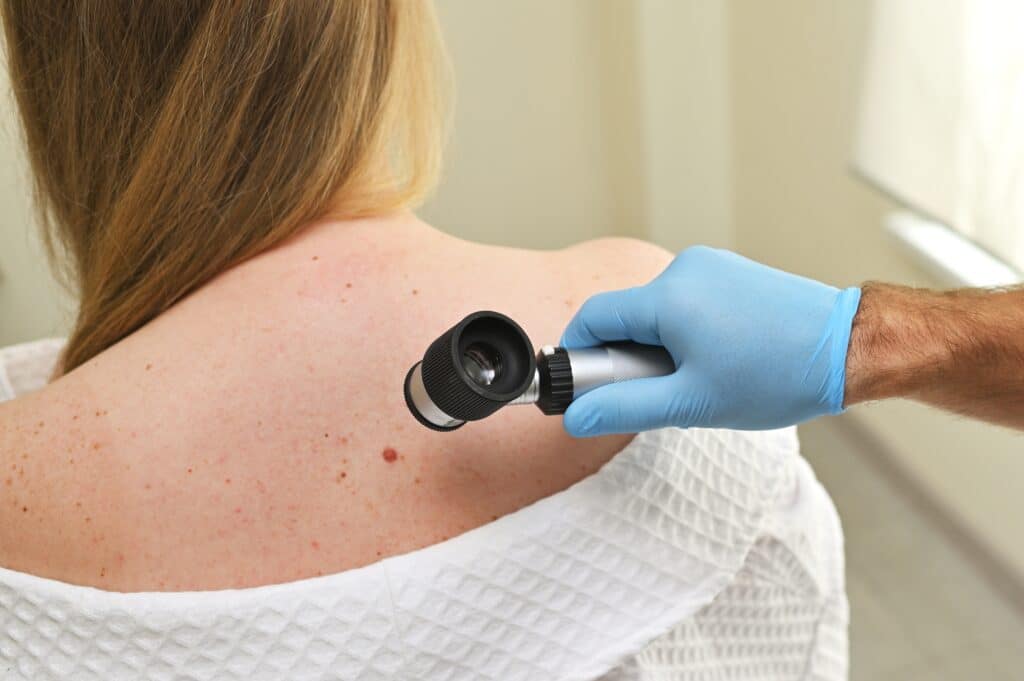
This is why annual skin checks are so important. It allows your dermatologist to identify and test any abnormal spots on your skin, so they can be treated early if necessary.
How Does Sun Exposure Cause Melanoma?
Too much sun exposure, especially sunburns, is the biggest preventable cause of melanoma. When UV rays hit your skin, they can damage the DNA in your cells, which may eventually lead to cancer.
People with lighter skin are at higher risk because they have less natural melanin to protect them. Years of sun exposure, combined with occasional bad sunburns, create the perfect conditions for melanoma to develop.
So if sun damage causes many melanomas, why do some appear in areas that never get sun exposure? The answer has to do with where your pigment-making cells are located.
Why Can Melanoma Appear in Sun-Protected Areas?
Here’s the key thing to understand: melanocytes (those pigment-making cells) are found all over your body, not just on skin that gets sun exposure. They’re everywhere, from your scalp down to the bottoms of your feet.
Since melanoma starts in melanocytes, the cancer can potentially develop anywhere these cells exist. UV damage from the sun is certainly a major trigger, but it’s not the only thing that can cause melanocytes to become cancerous.
Your genes play a big role, too. If someone in your family has had melanoma, your risk goes up, no matter how careful you are about sun protection.
Some people have unusual-looking moles called dysplastic nevi that tend to run in families. These moles can appear anywhere on your body and increase your melanoma risk in both sunny and shaded areas.
Where Do Hidden Melanomas Commonly Appear?
Melanoma can show up in some surprising places. The palms of your hands and the soles of your feet are two common spots where melanoma develops, even though these areas rarely see the sun.
Under your fingernails and toenails is another place to watch. These melanomas often look like dark streaks or discoloration, and people frequently miss them because they don’t think to check there.
Your mouth can develop melanoma too. These can appear on your gums, tongue, roof of your mouth, or other oral surfaces that obviously never get sun exposure.
These locations prove that melanoma isn’t just about sun damage. These hard-to-see locations make it clear why you need a dermatologist to do thorough skin checks. Even if you’re diligent about self-exams, you’ll likely miss these spots.
What Happens if Melanoma Is Found?
Treatment depends on how deep the melanoma has grown. Melanoma in-situ (the earliest form that stays in the top layer of skin) has a very low chance of spreading and can almost always be cured with surgical removal.
For early melanomas that have started to grow deeper, you’ll need surgery to remove the entire tumor. This is usually done in the office with local anesthesia, and the doctor will stitch up the wound afterward.

If your melanoma is deeper, your doctor might recommend a sentinel lymph node biopsy. This test uses a special dye to find and remove the first lymph node that drains from the melanoma site to check if the cancer has spread.
For higher-risk melanomas, you might need imaging tests like CT scans, MRIs, or PET scans to look for any signs the cancer has spread. Blood tests may also be part of the evaluation.
Patients with more advanced melanomas usually meet with a cancer specialist (medical oncologist) to talk about other treatment options. These might include immunotherapy drugs like interferon or newer medications such as vemurafenib or ipilimumab.
The depth of the melanoma is the biggest factor in predicting outcomes. Deeper melanomas have a higher chance of spreading, which is why catching melanoma early makes such a huge difference.
If you have questions about your skin, schedule an appointment at Moy-Fincher-Chipps today!