


Finding hair on your pillow, in the shower drain, or wrapped around your hairbrush can be unsettling, but a certain amount of shedding is a completely normal part of having a healthy head of hair. The tricky part is knowing when everyday hair loss becomes something that deserves a closer look from a professional.
Keep reading to learn how to tell the difference between normal shedding and hair loss that may need attention, what causes it, and when it’s time to schedule an appointment with a dermatologist.
How Much Hair Loss Is Actually Normal?
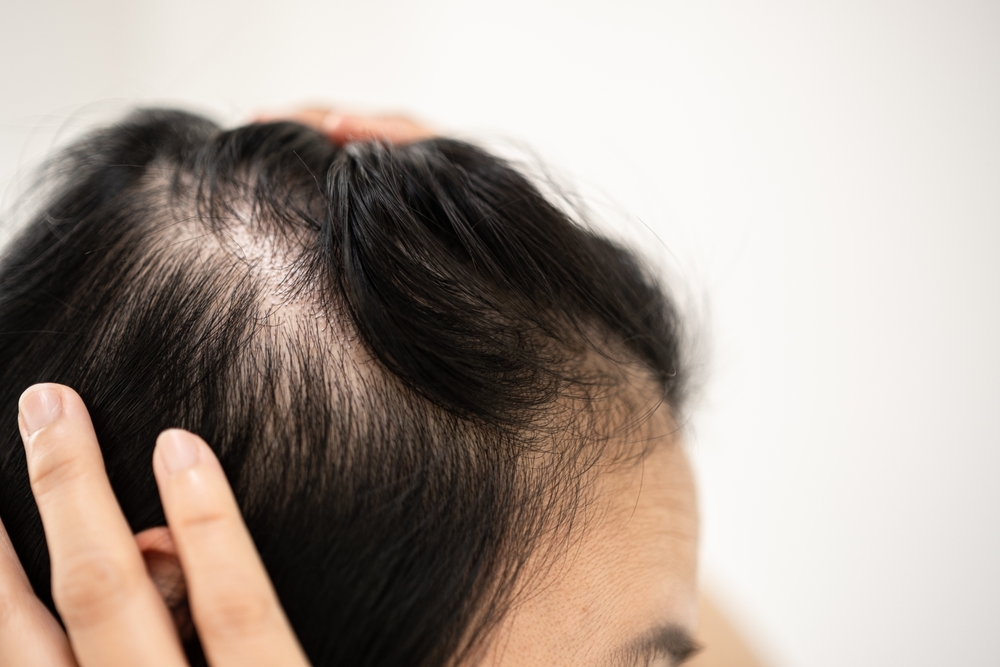
The average person loses somewhere between 50 and 100 hairs a day, which can look like a lot when you see it collected in one place.
Hair grows in cycles, so at any given time, some hairs are growing, some are resting, and some are getting ready to fall out and be replaced.
Shedding can also fluctuate based on the season, your stress levels, and even your age. Many people notice more hair loss in the fall, and others see an uptick after starting a new medication or going through a stressful stretch of life.
If you’re not seeing thin patches, a wider part, or a noticeably emptier hairline, what you’re experiencing is probably just normal shedding. Hair often looks like more than it really is when it’s wet, tangled, or pulled out by brushing.
What’s the Difference Between Shedding and Hair Loss?
Shedding and hair loss may look similar in the drain, but they’re not exactly the same thing.
Shedding refers to hairs that fall out as part of the normal growth cycle or in response to a temporary trigger, with the follicles still producing new hair underneath.
Hair loss, on the other hand, happens when something interferes with the follicle itself. The follicle may slow down, shrink, or stop producing new hair altogether, which over time can lead to thinning or bald areas that don’t fill back in on their own.
Knowing which one you’re dealing with matters because the approach is different for each. Shedding usually resolves once the trigger is addressed, while true hair loss often benefits from earlier treatment to preserve what you have.
Why You Might Be Experiencing Temporary Hair Shedding
Many cases of sudden, noticeable shedding are temporary and tied to a specific event or change in your body. Most of these resolve as your body recovers, even if the timeline feels slow.
Stress and Major Life Events
Significant emotional or physical stress can push more hairs than usual into the resting phase of the growth cycle. Two to three months later, those hairs shed all at once, which is why hair loss often shows up well after the stressful event itself.
Pregnancy and Hormonal Shifts
Many new parents notice heavy shedding a few months after giving birth, as hormone levels return to normal. Other hormonal events like starting or stopping birth control, thyroid issues, or menopause can also trigger temporary changes in hair density.
Illness, Medications, and Nutrition
A high fever, surgery, or extended illness can cause noticeable shedding once your body starts to recover. Certain medications, low iron, low vitamin D, and crash diets that limit protein can also contribute to thinning.
Hairstyling Habits
Tight ponytails, braids, buns, and extensions create constant tension on the hair follicles. Over time, this can cause breakage and even permanent damage if the habit continues for years.
Signs Your Hair Loss May Need a Dermatologist’s Attention
While some hair changes are nothing to worry about, certain signs are worth taking seriously. If you notice any of the following, it’s a good idea to schedule an evaluation.
- Distinct bald patches or circular areas of missing hair
- A part line that looks noticeably wider than it used to
- A hairline that is steadily receding or thinning at the temples
- Sudden, heavy shedding that comes on quickly and doesn’t slow down
- Itching, burning, pain, redness, or flaking on the scalp
- Shiny, smooth areas where the scalp looks scarred or where hair never grows back
- Loss of hair in other areas of the body, such as eyebrows or eyelashes
Catching these signs early gives your dermatologist more options for treatment and a better chance of preserving the hair you still have.
Conditions Behind More Serious Hair Loss
There are several specific conditions that can cause more lasting hair loss. Each one has its own pattern, cause, and treatment approach, which is why a proper diagnosis is so important.
- Pattern hair loss, sometimes called androgenetic alopecia, is the most common type and tends to run in families.
- Alopecia areata is an autoimmune condition that causes round patches of hair loss and can come and go unpredictably.
- Traction alopecia results from years of pulling on the hair through tight styles.
- Scarring alopecias are less common but more serious, as they can permanently destroy the follicles if not treated quickly.
- Telogen effluvium is associated with stressful events. Hairs lose their shaft after the event and grow back 3-4 months later.
How Dermatologists Diagnose the Cause
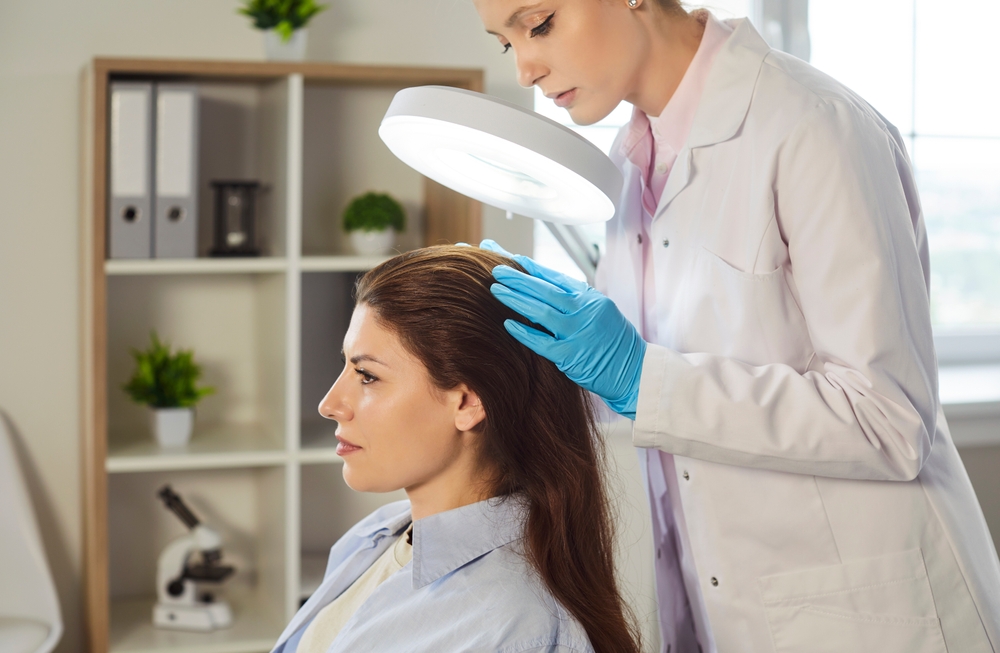
A hair loss evaluation usually starts with a detailed conversation about your medical history, family history, recent life events, medications, and diet. This part of the visit often gives the most useful clues about what’s happening.
Your dermatologist will then examine your scalp closely, sometimes using a special magnifying tool to look at individual hairs and follicles. Blood work may be ordered to check for thyroid issues, iron deficiency, vitamin levels, or hormonal imbalances.
In some cases, a small scalp biopsy is needed to confirm the diagnosis. This is a quick in-office procedure that can provide clear answers, especially when several conditions could be at play.
How Is Hair Loss Treated?
The right treatment depends entirely on the cause, which is why a proper diagnosis comes first. Your dermatologist can help you figure out which approach, or combination of approaches, fits your situation best.
Medical Therapies
Medical therapies include FDA-approved options like finasteride, dutasteride, and minoxidil that block hair loss hormones or stimulate follicles directly. These convenient, non-surgical treatments are often very effective when started early.
Regenerative and Bio-Enhancement Therapies
Regenerative therapies use your body’s own healing processes to stimulate growth, including Platelet Rich Plasma (PRP), ACell Bio Matrix, and exosomes. They can be used alone or paired with other treatments for stronger results.
Hair Transplant Surgery
For more advanced hair loss, surgical hair transplantation is the gold standard for permanent restoration, with modern techniques like FUE and Strip FUT producing natural-looking, lifelong results. Hair regrowth is a slow process no matter the treatment, so patience and consistency are key.
If you have questions about your skin, schedule an appointment at Moy-Fincher-Chipps today!